Industries
Alro Steel Industry Applications
Different sectors use the same metal families in different ways, so quoting starts with the use case, not only the grade.
Industries
Different sectors use the same metal families in different ways, so quoting starts with the use case, not only the grade.
Markets by Work Type
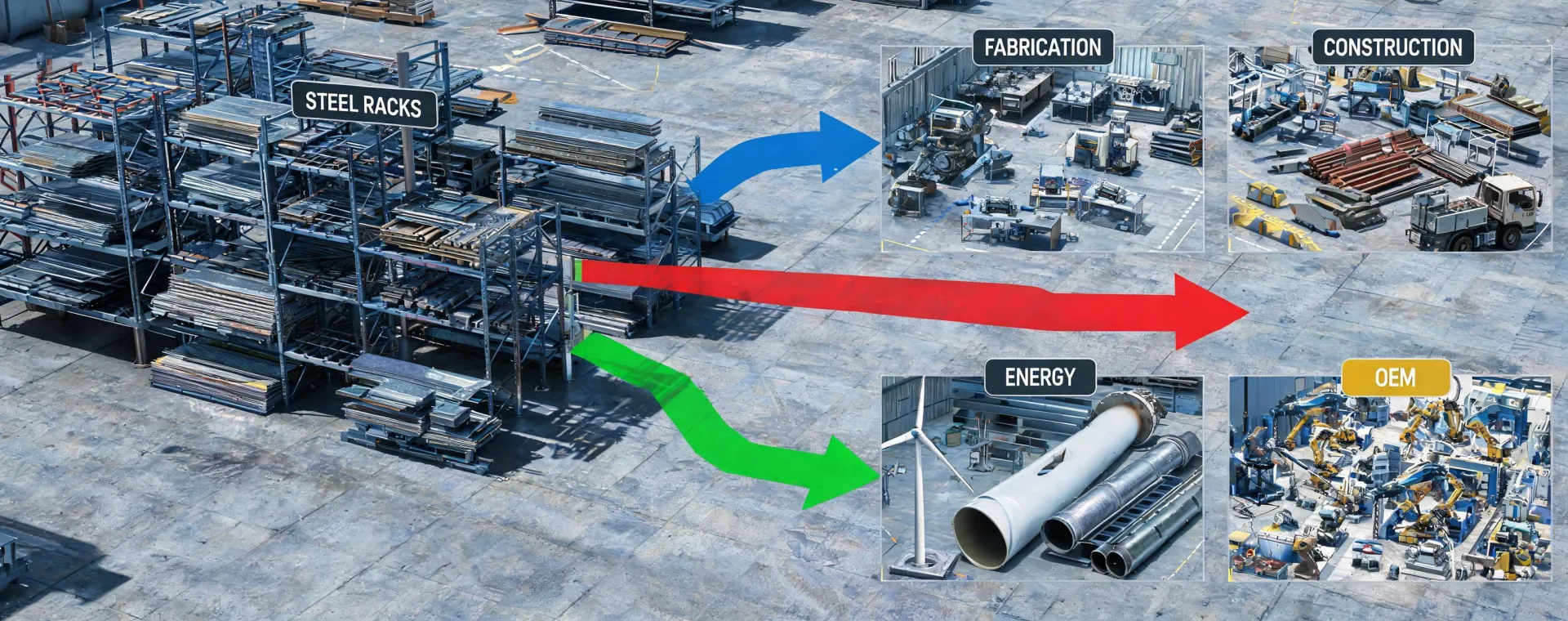
The map-based structure below treats each market as a routing problem: what forms are needed, how they are processed, what constraints affect delivery and which buyer roles need information before release. Construction, OEM fabrication, energy equipment and maintenance work can all use carbon steel, stainless, aluminum and tool steel, but their acceptance criteria are rarely identical. A structural job may prioritize beam availability, plate thickness and bundled delivery. A machine builder may care more about bar straightness, repeat blanks and machinability. A food or washdown equipment supplier will focus on stainless finish, corrosion performance and documentation. Alro Steel keeps those differences visible so buyers can move from market context to material action without wading through unrelated claims.
Carbon plate, structural shapes, tube and reinforcing forms support frames, platforms, brackets, access structures and jobsite fabrication. Quote notes often include length, lift constraints, coating plans and delivery sequencing.
Repeat machine builds need consistent bar, sheet, plate and blank supply across carbon steel, stainless, aluminum and tool steel. Buyers can attach drawings, release windows and tolerance notes for smoother replenishment.
Energy work may combine structural steel, corrosion-resistant stainless, aluminum components and specialty grades for skids, housings, supports and service parts. Documentation and packaging should be specified early.
Maintenance teams value short paths to usable stock: cut bar, replacement plate, tube, sheet and tool steel inserts. Clear dimensions and due dates help separate urgent replenishment from planned work.
Demand Signals
Route By Application
Use the inquiry form to share industry context, grade requirements, form, processing notes and delivery timing.